
Effective Home Service Sales Strategies to Beat Seasonal Slumps
The Revenue Architecture Blueprint: Scaling Florida Home Service Operations Through Seasonal Demand Slumps
Quick Answer: Implementing high-converting home service sales strategies requires transitioning from reactive marketing to a systems-driven sales engine. Modern contractors must master speed-to-lead automation, build multi-option presentation workflows, and enforce strict customer relationship management (CRM) governance to maintain peak profitability during seasonal demand slumps.
Florida summers create a strange contradiction for residential contractors. The heat index breaks records, thunderstorms roll in daily, and your field technicians sweat through their uniforms by 9:00 AM.
Yet, despite the extreme weather, many residential companies watch their profit margins melt away. HVAC companies, plumbers, roofers, and electricians frequently experience sudden cash flow drops.
The phones still ring, but your overall lead conversion rate often nose-dives. Estimates sit in limbo for weeks. Homeowners become deeply cautious with their spending as their own cooling bills spike.
When demand feels sporadic, many contractors panic. They dump thousands of extra dollars into Google Local Services Ads (LSA) or Facebook campaigns.
However, throwing marketing dollars at a leaking pipeline will never fix the underlying structural issue. The home service businesses that consistently scale through seasonal slumps are rarely those with the deepest advertising pockets. Instead, they are the companies with the most bulletproof sales systems.
📌 Key Takeaways
Response Speed Wins: Replying to online inquiries in under 5 minutes boosts booking rates by over 391%.
Ditch Flat Bids: Presenting a multi-option tier structure shifts consumer psychology from cost to value.
Own Your Data: Replace paper logs and spreadsheets with a centralized, automated CRM system.
Train Technicians Daily: Move field personnel away from technical jargon toward consultative problem-solving.
Lead With Financing: Introduce low monthly payment options early in the sales cycle to lower cost barriers.
Table of Contents
Why Local Contractors Struggle During Summer
The Psychology of the Modern Regional Homeowner
Speed-to-Lead Automation as a Competitive Tool
The Hidden Weakness of Manual Operational Systems
Transforming Websites into Active Digital Salespeople
Shifting Field Teams to Consultative Problem Solving
Maximizing Average Tickets via Structured Presenting
Consumer Financing Platforms as a Core Sales Accelerator
Building an Automated Multi-Channel Follow-Up Engine
Structured Reputation Management and Review Strategies
Systems Engineering During Seasonal Slower Periods
Frequently Asked Questions
Quick Answer: Seasonality is rarely the root cause of a failing bottom line. Instead, summer simply acts as a mirror, exposing existing structural weaknesses like delayed lead responses, vague quotes, and a total lack of automated follow-up sequences.
Most business owners blame the summer slump entirely on external seasonal factors. While consumer behaviors certainly change when school lets out, seasonality is rarely the primary culprit.
Instead, a slowdown highlights vulnerabilities hiding inside your operational framework. During chaotic peak seasons, your company can easily survive in spite of operational inefficiencies.
High inbound demand routinely masks major systemic flaws. These flaws include delayed lead response times and vague, single-line text or email proposals.
Overcoming High Inbound Demand Flaws
When demand is high, you can lose half your leads and still hit your revenue targets. The sheer volume of opportunities keeps your trucks moving.
However, when the local market tightens, those hidden inefficiencies become incredibly expensive. Every single lead matters exponentially more.

Engineering Predictable Customer Journeys
To thrive, contractors must stop operating reactively. You must design an intentional, repeatable customer journey that builds absolute consumer trust.
⚠️ Common Mistake: Buying more expensive marketing leads before fixing your internal sales process. This approach simply accelerates your money loss and burns your local brand reputation.
The days of a consumer flipping through a phone book and blindly hiring the first contractor are completely gone. Today's consumer behaves differently, particularly in a transient, highly competitive market.
Long before a prospect ever contacts your dispatch team, they have likely conducted a thorough digital audit. They review your public history and social media footprints deeply.
By the time your dispatcher books the call, the customer has already formed an initial hypothesis. They have already guessed whether your business feels trustworthy, competent, and fair.
Why Aggressive Sales Methods Fail
Because modern consumers are more informed than ever, old-school, high-pressure sales tactics are rapidly losing effectiveness. They alienate buyers and destroy long-term brand equity.
Modern residential buyers look for an entirely different experience centered around operational transparency. They demand clear breakdowns and upfront explanations.
Digital Audit Path: Discovery → Review Analysis → Social Verification → Action
Navigating Hyper-Local Market Needs
Homeowners want to understand why a component failed. They want to know how a specific material handles regional UV rays and salt air.
If your workflow feels disorganized or delayed, modern homeowners will quietly pivot to a competitor. The highest-converting system is built intentionally around reducing consumer uncertainty.
📊 Data Point: According to residential tracking statistics published by the University of Florida IFAS Extension, transparency in home maintenance billing significantly increases long-term regional brand retention and customer loyalty. (Source: UF IFAS Extension)
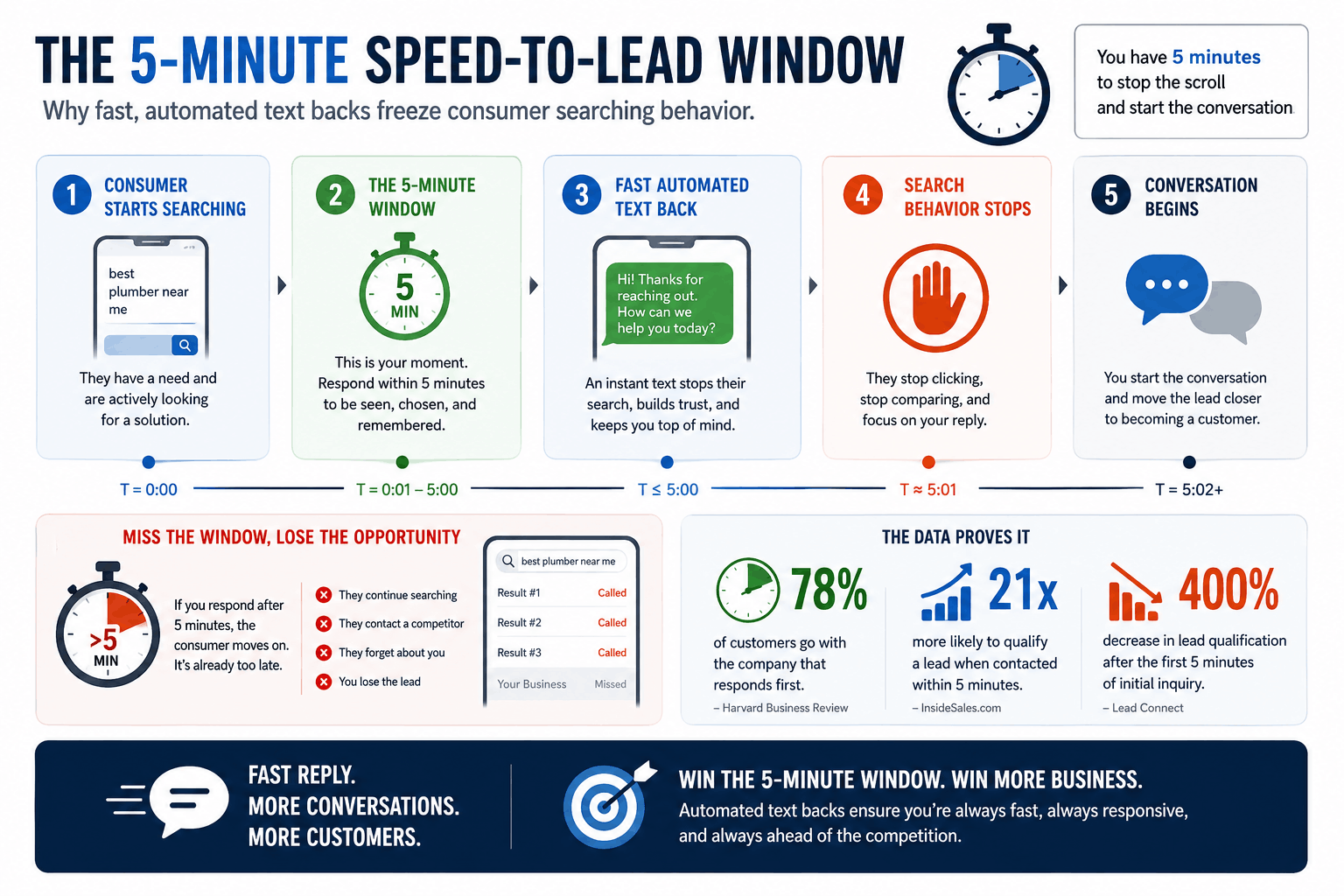
Quick Answer: Speed-to-lead automation involves using instant technology responses, like missed-call text backs and real-time CRM routing, to engage a prospect within 90 seconds of a form submission.
One of the quietest revenue killers in residential contracting is delayed response time. Whether a homeowner is dealing with a blown AC compressor or an urgent roof leak ahead of a tropical storm system, they rarely reach out to just one company.
They open search engines, scan local providers, and submit requests down the line until someone gives them a firm commitment.
The Gold Standard of Lead Engagement
Comprehensive field studies show that responding to an inbound web lead in under five minutes increases your booking chances by over 391%. If your office team takes hours to review an email form, you have already lost the job.
Top-performing service brands win by implementing automated speed-to-lead frameworks. This workflow ensures no lead is left to cool off.
Critical Speed-to-Lead System Protocols
Automated Missed-Call Text Back: If an office line is busy, an immediate SMS is automatically triggered to the homeowner.
Instant Email Sequences: The moment a form is submitted, the customer receives a personalized confirmation containing a booking link.
Smart CRM Routing: Inbound opportunities parse through your system and route directly to an available dispatcher for immediate phone outreach.
Many growing companies attempt to manage their entire sales pipeline using manual methods. When you only have one or two trucks on the road, it feels manageable to track open estimates via paper notes.
However, manual tracking completely shatters when you attempt to scale. It fails when lead volumes shift during highly competitive seasons.
Without a centralized, automated system, critical details slip through the cracks. Open estimates are forgotten, and performance cannot be accurately measured.
Manual Tracking Pitfall: Open Estimates → Lost Sticky Notes → Forgotten Leads → Lost Revenue
Gaining Absolute Pipeline Control
Transitioning to a professionally engineered CRM workflow provides deep visibility over your pipeline. You can see the total dollar value of open estimates sitting in your pipeline instantly.
You can also monitor which technicians maintain high close rates and healthy average ticket sizes. This structural data allows for accurate coaching interventions.
💡 Expert Insight: At Legacy Sales Engineering, we find that moving from spreadsheets to automated CRM pipelines reduces estimate expiration by up to 40% within the first ninety days.
Quick Answer: Your website should function as a 24/7 conversion engine by utilizing mobile-first design, prominent calls-to-action, and authentic trust indicators that eliminate buyer hesitation.
A surprising number of contracting brands treat their website like a passive digital billboard. It lists a phone number, shows a stock photo of a truck, and stays static for years.
Your web presence shouldn't just be an information brochure. It needs to function as your most reliable, highest-performing, full-time salesperson.
Implementing Omnipresent Calls-to-Action
Do not force a user to search for a way to contact you. A clear, high-contrast action button should be anchored at the top right of every page.
It should remain sticky on mobile devices. Use action-oriented, low-friction language like "Schedule Online Now" or "Book Your Free Comfort Estimate."
Executing Complete Mobile Optimization
Over 70% of local home service searches occur on mobile devices. Stressed homeowners frequently look for help while standing in a hot garage.
If your site takes more than three seconds to load, visitors will bounce back to search results instantly. Ensure your text formatting is readable without horizontal scrolling.
✅ Quick Tip: Build hyper-local, intent-driven landing pages for specific neighborhoods. This satisfies search algorithms while proving you understand regional building codes.
One of the greatest points of friction in this sector is the stereotype of the aggressive, pushy salesperson. When a technician rolls up with the sole goal of forcing a premium system replacement, defensive walls go up immediately.
The highest-performing field organizations do not train their team to push inventory. Instead, they train them to diagnose, educate, and consult.
This consultative approach is essential during regional slower periods. When technicians lead with genuine empathy and professional expertise, they naturally lower customer barriers.
Deploying Technical Sales Training
It is a common operational mistake to assume an elite diagnostic specialist will automatically be successful at presenting solutions. Technical aptitude and communication skills are entirely different skill sets.
Without deliberate communication and sales training, field technicians often default to complex mechanical jargon. This language confuses the homeowner and harms conversion rates.
Key Communication Frameworks for Techs
Field training programs should focus on building repeatable communication frameworks. Teach technicians to ask strategic, open-ended questions before diving into mechanical issues.
Train your team to take clear, high-resolution digital photos of damaged components to show the homeowner on a tablet. Seeing visual evidence builds immediate compliance.
Quick Answer: Presenting a structured, multi-option presentation menu removes binary "yes or no" choices, giving control back to the homeowner while naturally increasing average ticket values.
If you are still providing your clients with a single, flat estimate for a project, you are leaving money on the table. You are also driving your close rates down.
When you present only one price, you force buyers into a high-friction decision. They must choose whether to spend that specific amount with you or call a cheaper competitor.
High-converting field teams shift this dynamic by presenting a multi-option menu. This framework shifts the internal dialogue to an analytical choice among options.
The Multi-Option Presenting Architecture
By cleanly structuring your proposals this way, you hand control back to the customer. It removes the feeling of being cornered by a salesperson while naturally lifting ticket sizes.
Offering consumer financing is no longer an optional luxury for high-end contractors. It is an absolute operational requirement to survive modern economic shifts.
Between unexpected repair emergencies and tightening consumer wallets, many families lack liquid capital. They simply do not have $10,000 sitting idle when a core home system fails.
If your team waits until the end of a call to mention financing, you miss the window. Introduce flexible monthly payment options early in your dispatch scripts and digital presentations.
Psychological Benefits of Financing Integration
Removes Total Price Anxiety: Breaks down high financial barriers, allowing clients to prioritize long-term value over upfront costs.
Accelerates the Closing Process: Enables technicians to secure instant, on-the-spot approvals on a tablet within minutes.
Drives Higher Ticket Upgrades: Customers are far more likely to invest in premium options when it only adds a small amount to their monthly payment plan.
Quick Answer: An automated multi-channel follow-up engine uses a timed sequence of text messages, emails, and phone calls to keep your brand top-of-mind without frustrating the client.
The vast majority of unclosed revenue in the contractor space isn't lost to a competitor. It is lost to a complete lack of consistent follow-up.
An advisor visits a home, emails a quote, and then never contacts the homeowner again. Or perhaps they make a single follow-up call, get sent to voicemail, and drop the lead entirely.
Data shows that up to 50% of major system replacements are closed between the third and sixth touchpoint. Homeowners are incredibly busy and get distracted.
14-Day Automated Sequence: Day 1: Thank You → Day 2: Q&A Call → Day 4: Value Email → Day 7: Check-in SMS → Day 10: Financing Pivot
Implementing a 14-Day Communication Sequence
An elite, multi-channel follow-up system keeps your brand top-of-mind. On Day 1, send a personalized email and text thank-you note.
On Day 2, place a follow-up phone call to answer any immediate technical questions. On Day 4, send a helpful text containing an educational article or local video.
By Day 10, pivot your messaging to focus on promotional financing incentives. Automating this sequence within your CRM ensures your pipeline remains consistently active without manual overhead.
Your online reputation functions as an active conversion engine. In local home services, your recent review history is often the single biggest factor determining whether a homeowner contacts your office.
To build an authoritative, high-converting review profile, implement a structured company-wide acquisition system. Tie reviews directly to field incentives.
Offer a clear financial bonus to field staff for every five-star review that mentions them by name. This transforms your crew into enthusiastic brand advocates who deliver excellent service.
Capturing Reviews at Peak Satisfaction
The optimal moment to ask for a customer review is right before your truck leaves the driveway. This is when the mechanical issue is perfectly resolved, and the customer is experiencing peak relief.
Have your technicians pull up a dedicated QR code on their tablet before heading out. Encourage them to send an automated link via SMS straight from the CRM.
📊 Data Point: According to small business metrics verified by the U.S. Small Business Administration, companies that maintain fresh, automated review pipelines experience higher organic search placements and lower customer acquisition costs. (Source: SBA.gov)
Quick Answer: Slower seasonal blocks provide the ideal operational window to work on your business by auditing CRM configurations, documenting operational SOPs, and running team workshops.
Most contractors treat the summer slowdown as a period of frustrating stagnation. Growth-focused organizations view this seasonal shift as an incredibly valuable opportunity to work on the business.
Use these slightly slower weeks to clean house, optimize workflows, and build foundational infrastructure. This preparation ensures you scale seamlessly when demand spikes.
Critical System Optimization Protocols
Audit CRM Configuration: Clean up lead tracking statuses, build missing automated text alerts, and update digital price books.
Document Standard Operating Procedures: Build operational playbooks detailing exactly how your brand handles inbound leads.
Conduct In-Depth Team Workshops: Run interactive role-playing sessions with dispatchers to sharpen their phone scripts.
Optimize Your Digital Footprint: Refresh your website layout and expand your local photographic galleries.

To help you audit your current processes and implement these home service sales strategies, use this quick-reference checklist:
[ ] Audit Response Times: Track your true speed-to-lead for web inquiries and ensure every lead is contacted in under 5 minutes.
[ ] Deploy Missed-Call Text Back: Enable an automated SMS response for any inbound call your team misses during or after hours.
[ ] Implement Multi-Option Menus: Require field teams to present a minimum of three choices on every single sales call.
[ ] Integrate Paperless Financing: Embed mobile-approved financing options into your CRM so techs can offer monthly structures at the kitchen table.
[ ] Automate Follow-Up Sequences: Build an automated, 14-day text and email follow-up workflow for unclosed estimates.
[ ] Launch Review Incentives: Create a performance bonus program that rewards technicians for earning five-star Google reviews.
[ ] Schedule Weekly Roleplay: Dedicate one hour per week to training your field team on communication and consultative presenting.
What are the most effective home service sales strategies for seasonal slumps?
The most effective strategies include deploying automated speed-to-lead systems, using multi-option presentation models, and offering flexible consumer financing early in the customer relationship. Transitioning from flat, single-line bids to tiered presentations allows homeowners to pick a budget that fits their economic needs.
How does speed-to-lead automation improve contractor booking rates?
Speed-to-lead automation uses instant text backs and automated CRM routing to engage an inbound prospect within 90 seconds of a form submission. Engaging a buyer immediately stops them from continuing their search and contacting competing contractors.
Why do single-option pricing models hurt residential sales conversion?
Single-option models force homeowners into a high-friction "yes or no" decision regarding a single price point. Multi-option presenting structures shift the buyer's internal dialogue to an analytical comparison of different service packages, which naturally increases average ticket values.
What are the main benefits of integrating consumer financing into field software?
Integrating consumer financing platforms lowers upfront price barriers and turns intimidating totals into manageable monthly options. It empowers technicians to close larger deals directly on a tablet while ensuring your company receives full project funding immediately upon completion.
How should a home service business structure its follow-up process?
A home service business should build an automated, 14-day multi-channel follow-up sequence inside their CRM that utilizes emails, text messages, and phone calls. This cadence provides helpful educational content and payment options over a two-week window to re-engage distracted prospects.
Take Control of Your Revenue Architecture
A seasonal demand slump does not have to break your annual profitability. The contractors continuing to scale through the slowest months win because they have built a more resilient sales engine.
To systematically protect your cash flow today, execute these steps:
Audit your speed-to-lead metrics and ensure response times are under five minutes.
Build a multi-option presentation template featuring three distinct tiers for your field crew.
Integrate consumer financing choices directly into your digital quote presentations.
Launch a structured 14-day automated follow-up sequence inside your core CRM software.
Stop letting unpredictable weather patterns dictate your bottom line. Invest in your sales process architecture today, eliminate operational friction, and build a scalable brand.
Discover how our Legacy Sales Engineering consulting programs can optimize your business. If you are ready to modernize your technology stack, explore our specialized CRM integration and workflow automation services today.